Today’s readings focus on Matthew’s and Luke’s genealogies. It’s a long list of names that are mostly foreign to us. Some names are difficult to pronounce.
What is the purpose for these lists? A purpose is obviously to show Jesus’ lineage, but I think it’s deeper than that. These list contain some surprises. First, women are mentioned. That wasn’t normally the case with Jewish genealogies in this day. Second, while heroes of the Jewish faith are mentioned as ancestors of Jesus (Abraham and David), there’s also a king (Manasseh – 2 Kings 21) who the listeners would prefer to forget.
Finally, there’s just a lot of humanity here. And humanity is above all complex. Rahab is here. She was a prostitute, but also hid the Jewish spies. And then there is David and Bathsheba. David used his power to commit evil when he took Bathsheba, a married woman, as his own, and then had her husband killed to cover it up.
I think this is a second theme that we will see again and again. We as humans are complex. Our spirituality is complex. And even God is complex. We must continue to wrestle with the complexities in our lives. There is nothing neat and simple about them.
He was in the world, and though the world was made through him, the world did not recognize him. He came to that which was his own, but his own did not receive him. Yet to all who did receive him, to those who believed in his name, he gave the right to become children of God… John 1:10-12
I think this is a main theme that will be woven through the entire saga. We suffer from a blindness. Truth is right in front of us, yet we fail to see. Or at times we simply don’t want to see. The long-awaited Messiah walked in the midst of his own people yet they didn’t receive him. But others received him. His invitation was and is to all people. To the one who will hear, let him hear. And let him receive Christ.
What does it mean to receive? It’s different from belief. Belief is mostly about the head. Receiving is a whole body experience. It’s connected to the head but moves to the heart, and then goes further into our daily lives.
Around six weeks ago I realized that I was 100 days away from turning 50. As I was reflecting on this I decided that I wanted to use these 100 days as much as possible to prepare me to make this new year a great one.
I decided on a few practices, and one of those was to read through the New Testament.
The Bible has played a big role throughout my entire life. It’s also had a complex role in my life. There have been times when I was in it daily. It has a way of shaping thoughts and attitudes and the overall way that I take on a day. There have been other times when I’ve gone days and weeks without opening it. I’ve seen the harm that man’s interpretation of the Bible has done to our world. I’ve seen how passages have been twisted for the sake of power and control. I’ve had moments in my own life where the words on the pages brought not hope and encouragement but fear and frustration. And there have been times when I’ve wondered if I would continue to go to it.
I have an overall belief that most times in our lives, when we face something challenging, it’s best to run towards it rather than away from it. I think this is true for me right now when it comes to the Bible. So during these 100 days I want to run towards it.
My mind has continued to shift when it comes to the Bible. I recognize today more than any other time in my life how complex it is, and I’m ok with that. But I still find beauty and depth in it. When I read the Bible I come with curiosity and wonder. This isn’t something I’m mastering. It’s something I need to ground me and to help me live my life.
I purchased my copy of The Daily Bible in Chronological Order over 25 years ago. I’ve used it off and on during those 25 years, and a couple of years ago a friend and I read through the entire Bible in a year using it.
The spiritual practice I decided on for this time was to read through the New Testament and write a reflection each day. The New Testament begins tomorrow and ends on December 31.
As is reflected in the title, this Bible attempts to lay out the stories in chronological order. That means we begin with the birth of Jesus. I love this paragraph from tomorrow’s introduction. I’ll end today’s post with it…
Who is this Christ, this Messiah? His name is Jesus. His symbolic name, Immanuel (meaning “God with us”), signifies his deity. He is man, to be sure, but God as well; and he is God – the God of Creation – but man as well. God lowers himself so that man might be elevated. He leaves heaven so that man might enter it. To man, who cannot begin to understand the ways of God, it is clearly a great mystery. But what a marvelous and wonderful mystery it is!
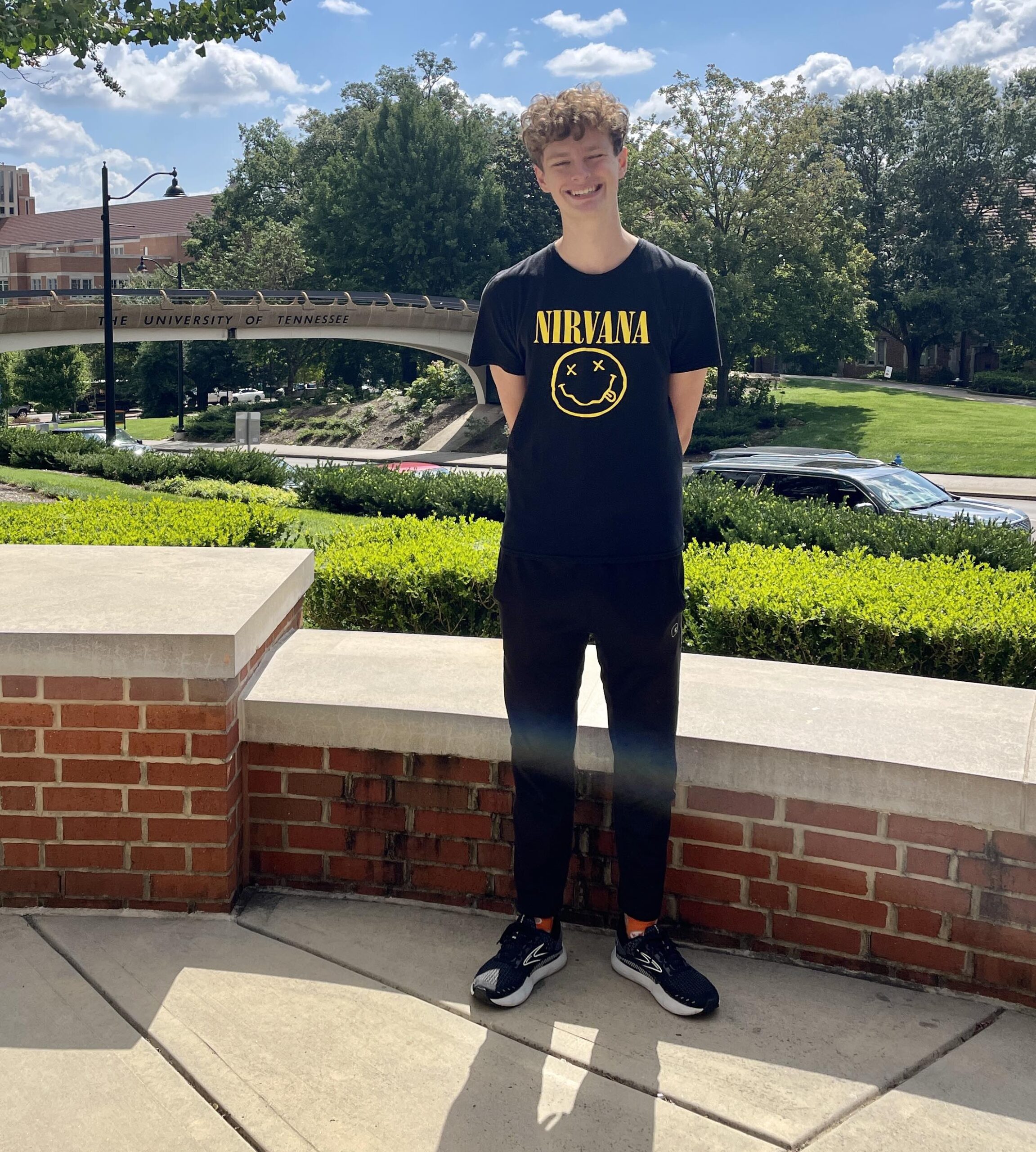
I’ve been thinking a lot about the parenting journey that we’ve been on. Mandy and I have spent the last 18 years seeking to love, protect and raise Adam, with the goal being that he would grow into an adult who would make an impact on the world. I was 30 years old when he was born. In that moment a new level of responsibility was thrust upon me that was unlike anything I had experienced before. My main role in life was now to be a dad. Most days I had no idea what I was doing, but I took the on the job training seriously.
In those early years the primary task was just keeping the kid alive. Was he eating? Sleeping? Was he healthy? I remember when he fell off our bed. He was so little. And we were so scared. But he was ok. God knew that parents would occasionally allow their babies to roll off beds, so he created them with a bit of bounce. We made our share of mistakes, but we loved this child, and our biggest longing was that we would be good parents to him.
As he grew up and became a very active and busy boy, that job of keeping him safe only grew. There was a new level of independence in him where he wanted to do things himself. Our role was even more critical. If left to his own devices things would not end up well.
Not only did we have to keep him from getting hurt, but we also had to shepherd his heart. How would we help him when he faced rejection by friends? Or disappointment when making a bad grade in school? We hated seeing his heart hurt. This was often more painful than seeing him physically hurt. As we know, those heart wounds can last way longer than the physical ones.
And we knew that we while we would be the ones tending to those wounds, we would also be the ones at times causing them.
Boyhood was sweet. We managed to keep him safe and healthy. We managed to guard his heart as much as we were able. And then he entered the teenage years. Things changed. Our role began to change. It was during these years that he would begin to transition from boy to man. We had a big role to play in helping that transition take place in a healthy way. We would need to give more freedom. We would have to let go more often, which was tough since there were so many opportunities for him to get hurt. And not just hurt like falling off the bed. The hurts were getting bigger.
I did my best in trying to be intentional about guiding him into manhood. We had somewhat weekly breakfasts. We read some books and memorized some Scripture together. More than anything, my goal was to create moments with him. Moments that would mark him and that he could look back on. More than anything I wanted to be present.
Around a year ago I knew that we were transitioning to a new phase of parenting, and this new phase would be very different from the previous ones. It was now time to begin preparing to launch him into the world. It was almost time to let him go. During the last year I have at times felt like that 30 year old new dad who felt helpless and who most days had no clue how to do the job.
I have spent the last 18 years trying to keep my kid safe. And now I’m meant to let him go! That is such a strange shift. Over the last year I’ve had friends ask me how I’m doing in preparing for this transition. The one word that’s most fit is the word “weird.” It’s going to be weird when he’s gone. It’s going to be weird when we leave him in his dorm tomorrow morning. It’s going to be weird when I don’t see him virtually every day of his life.
It’s going to be weird. And hard.
But this is the point we’ve come to.
Last year we watched a documentary on Netflix called Our Great National Parks. Barack Obama narrates it. I remember watching the episode about Monterey Bay. It features Northern Elephant Seals. The mama seal comes to shore to give birth to a pup. For the next month her only priority is to feed and protect her baby. But after a month she has to return to sea to feed herself. And she leaves the pup to fend for himself. And then we learn that she’s never going to return to him. You see the mama leaving and the pup crying. And now I’m crying. Dang you Barack Obama.
Apparently this is the way that God designed things. I’m just grateful that I’ve had 18 years rather than one month.
In some ways I’m ready. For the last year our son has been itching for more independence. That’s how he’s been wired. And it’s time for him to leave the house. He needs it. And we need it. A year or so ago Mandy showed me a video of Jerry Seinfeld on the Tonight Show. Jimmy Fallon asks him how things are going now that his oldest child is in college. Jerry said it’s kind of like having a baby alligator. It’s so cute. People come over to see the baby alligator, to feel its baby alligator teeth. But then some years go by, and the baby alligator becomes a big alligator, and at some point you say, “We’ve got to get this thing the hell out of here!”
Man, do I resonate with this. It’s time. It’s time to launch the kid into the world. It’s the right time. Adam craves independence because it’s time for him to take on more responsibility.
Adam is ready. He knows who he is. Though it’s weird and hard, I am able to let go in large part because I am confident that he is going to thrive in this next phase of his life.
I need to mention that we haven’t been on this journey by ourselves. We’ve had other parents to walk alongside. We’ve had grandparents and aunts and uncles helping us. There have been great teachers and mentors. Church communities and ministry leaders. We’ve had a community that we’re thankful for.
I don’t know what the drive home tomorrow will be like. I’ve never experienced this before. But I think we’re going to be ok.
I consider gratitude and contentment to be super powers. In a way they are such simple things. We teach kids from an early age to say thank you, and we encourage them to play with and enjoy the toys that they have rather than always wanting more. Gratitude and contentment are practices. They require intentionality. They require practice.
If I’m going to become a grateful person, I must practice gratitude. How do I do this? One exercise is to take a couple of minutes and write down 10 possessions that you enjoy, that bring you happiness, and that you are in turn grateful for. So often we take things for granted. I remember when we bought our current house almost ten years ago. After we moved in, there were so many things that Mandy and I were grateful for. Our previous home was on a corner lot and therefore didn’t have a driveway. A driveway is not a huge thing, and it was something that we got used to not having. But now we had one, and it was great. It meant we could get a basketball goal. And it meant at least one of us didn’t have to park on the street. We found ourselves rehearsing together all of the awesome things with our new house. We were grateful for it, and we were going to enjoy it.
We bought a hot tub a few years ago. I’ve always heard that the majority of people who buy hot tubs end up not using them that often. They often leave them sitting, and they therefore end up having to continue to put money into the hot tub for repairs. At some point they try to sell or even give away the hot tub. I resolved early on that if we were going to have a hot tub, we were going to enjoy it. And we were going to take care of it. We have weekly chores with the hot tub, and my primary chore is the quarterly draining, cleaning and refilling. Taking care of this expensive purchase brings greater appreciation for it. I want what I’ve spent my hard earned money on to last. We take greater pride in the things that we take care of.
Are there purchases I’ve made that I’ve regretted? Absolutely. When the pandemic began in the spring of 2020, we recognized that we were most likely going to be spending a lot of time at home for the next few months. So we decided to buy an above ground pool. I got a killer deal on a pool, and we spent a day putting it together. It took up most of the backyard. We then had to fill it up, and then it took quite awhile before the water was warm enough to swim in. We spent a fair amount of time that summer in it, but it was difficult to keep clean. We kept the water in it through the next fall and winter. And during that winter we had some very cold days. I had bad dreams about waking up to find that the liner had burst and our yard (and my office) had flooded. That thankfully didn’t happen, but it was something I worried about. When we opened it back up that spring, it was even more difficult to clean. We rarely used it that summer, and by the end we had had enough and were ready to get rid of it. We drained it, allowed it to dry, and then took it apart. Mandy posted it on the Buy Nothing Facebook Group, and we gave it away to a nice family.
Soon after getting rid of the pool we decided that we needed to do some work in our backyard. It obviously was in way worse shape than it had been prior to having the pool. We ended up hiring a landscaper, who planted trees and other plants, added hardscape, and planted fescue grass. I enjoy my backyard so much more now. Every time I sit in the Adirondack chairs listening to the fountain, I’m grateful. The pool purchase wasn’t the best one, but it led to this.
Here’s something I’ve learned: Consumerism fights against gratitude and contentment. Why? Because it’s all about getting more. It kills contentment, but it also kills enjoyment. Here’s a question to ask yourself: Do you enjoy the things you have, or do you focus more on what you don’t have?
I experienced this recently. I had decided that perhaps it was time to purchase a new (to me) vehicle. For about a week I took a deep dive on researching vehicles. I had been looking at trucks, but then decided that perhaps I’d get a small SUV. I found a RAV4 Hybrid with really low miles. The dealer was offering me more on my current car than I had thought. The hook was in.
Mandy and I are committed to making large purchase decisions together. She didn’t feel great about it, and if I’m honest, I think I was looking for that because even though the hook was in, I was fighting it. I didn’t really need it, at least not right now. So I said no.
Consumerism is a vicious cycle. We buy something believing that it will satisfy us. And it does for a few days. But then the shine wears off, and we think we need something new. So we push that first purchase to the side and search for the next thing that will bring satisfaction. This cycle continues until you say enough.
We instead intentionally choose to actually enjoy what we have purchased. We are grateful for it. This leads to contentment, which leads to more gratitude, which then leads to greater contentment. It’s a powerful thing.
The day I said no to the new vehicle, I decided that I would practice gratitude and contentment with the car I currently have. It’s a really nice car. The way I practiced this was that I spent two hours washing, waxing, cleaning out and vacuuming it. It looked so nice after I had finished. I was taking pride in what I owned. I was going to enjoy it.
Before sharing my thoughts on this podcast episode, I should say that one of the things I’ve always appreciated about Dave Ramsey is how caring he is when people are in a rough situation. The conversations are very therapeutic. He speaks truth in a sometimes harsh way, but you can also tell that he cares deeply and wants to help them. Ramit understands the psychology of money in a way that few others do. He’s great at asking questions, and most of the time they make people feel very uncomfortable. This interview was definitely the case.
The tagline of the episode is “We achieved FIRE with $4.3M. Why can’t we enjoy it?” Even though the Jensen’s are financially independent and only work because they want to, they are honest about the fact that money still has a strong grasp on their lives. At one point in the interview Ramit asked Mindy to share about a recent trip to Germany. Her initial response was a negative one, and this was due to how much they spent on airfare. And the reason this was her first response is that she felt bad because she didn’t use points. She paid full price. She’s supposed to be the money expert. How would those in the FIRE community feel about her? As Ramit pressed for more about the trip, she shared about all of the great experiences they had. But this lack of optimizing still loomed over everything.
I’ve listened to several of Ramit’s interviews. There’s often one partner who holds so tightly to the money, which is frustrating to the other partner. That partner wishes his or her partner would stop being so cheap, especially when the amount of money they have in the bank tells them that they don’t have to be cheap. In the case of Carl and Mindy, it seems like both have been called cheap.
I have mixed feelings about this interview. I on many occasions have been labeled as cheap. And while others might have scoffed, I looked at it as a badge of honor. I remember in college even redefining it. Cheap was a negative word. I preferred the word “simplicity”. It’s been 25 years since that revelation, and in the time since I have continued to wrestle with the role of money in my life. I want to continue to listen to Ramit because it doesn’t seem like he struggles with a scarcity mentality when it comes to money. At the root that’s what I struggle with, and it seems to be what Carl and Mindy struggle with as well. There is a fear that our money could run out. It’s not a rational fear, but it’s a fear nonetheless.
At the same time, I often feel like Ramit doesn’t give enough space to allowing people to spend their money on what makes them happy. When I spend money on something that I think isn’t worth it, it leaves a bad taste in my mouth. At this point in my life I know what makes me happy, and I have absolutely no problem spending money on those things. Here are some examples…
I enjoy cooking. I actually prefer cooking to going out to eat. Therefore I am ok spending a higher amount of money on good food to cook at home.
I enjoy traveling. While I love optimizing travel through credit card rewards, we still spend a good chunk of money each year on travel. We don’t feel bad about that.
We spend a lot of time at home. Mandy works from home a couple of days a week, and I work from home every day of the week. We enjoy our evenings at home, and therefore have spent money on making this a restful and enjoyable place. Over the years we’ve invested in a screened in back porch, a hot tube, and a pretty backyard.
As important as knowing what it is that makes me happy, it’s perhaps even more important to know what doesn’t make me happy. Here’s a few of those things…
New cars
Fancy meals
Going out every night
Nice clothes
My list isn’t important. What is important is to come up with your own list. Be bold in spending money on the things that make you happy. And be equally bold about saying no to those things that don’t.
There are two exercises that I encourage anyone who desires to begin mastering their money to do.
The first is to track your spending for a month. This should lead to you becoming more pro-active in spending your money on the things that matter most. Here is a worksheet you can download. There are also lots of Google Sheet or Excel templates you can download if you prefer a digital option. After going through the exercise you may decide that one month isn’t enough. I still track mine. It’s something that I’ve done for a long time.
The second is to calculate your net worth. How do you do this? You write down all of your assets in one column, and then you write down all of your liabilities in another column. Add up both columns, and then subtract your liabilities from your assets. The number you come up with is your net worth. Here’s a worksheet you can download.
I’ve discovered in my own life and in the lives of friends that there is one primary reason that we don’t take the time to know our numbers. It’s not busyness. It’s fear. We’re afraid that we won’t like what we see, so we choose to remain ignorant. Yet we know that awareness is the first step of any vision. And that’s why it’s important that we know and understand our numbers, even if at the beginning we don’t like what we see. Once we have awareness, we can now make goals.
I first became familiar with Derek Sivers in 2015 after hearing him on the Tim Ferris podcast. Shortly after I read his first book, Anything You Want, which was recently re-released with additional chapters.
Today I listened to his latest interview on Tim’s podcast. It’s a great episode, and clocks in at a strong three hours. The entire interview is great, but I want to share one thing I learned. If you’d like to listen to it, this part begins around the 2:11:00 mark.
Derek is talking about video games. He shared about how there is the temptation to continue playing even after you’ve beaten the game; even after there are no additional rewards. Then he said, “Isn’t that the definition of addiction?” He then defines addiction as “Continuing a behavior even though it’s not rewarding you anymore.”
Then he made the jump to how he thinks about making money. He said, “It’s a game I decided to stop playing because I had enough.” Understanding what you need, and then making the intentional decision to stop once you get there, is something I’ve been thinking about for awhile now.
Sivers shares two examples of people who have done this. Gotye wrote the song “Somebody that I Used to Know” in 2011. It was a huge hit, and could have carried him for years. Yet a couple of years later he retired. He decided that he didn’t want to be singing that song for the rest of his life.
Cameron Diaz was the 5th highest grossing actress, and yet she too decided to quit. She wanted something different from life.
Sivers then referenced Felix Dennis, the author of How to Get Rich. He said that he read that right after selling CD Baby and had a lot of money. He made the decision to put the company in a trust before the sale, which meant that he never touched any of the $22 million it sold for. I believe I read that he receives a small percentage every year, which pays all of his expenses. He knew that he didn’t need $22 million.
Here’s the quote he shared from Felix Dennis that impacted him: “If I had my time again, knowing what I know today, I would dedicate myself to making just enough to live comfortably, as quickly as I could, by the time I was 35. I would then cash out and retire to write poetry and plant trees.”
Sivers decided to heed this advice. He quit the game of making money. And it seems to me that he continues to bear fruit as a result of this intentional and counter-cultural decision.
So why do we continue to make money when we have enough? It seems like a simple thing, yet it is very normal. I don’t know if it’s the case for everyone, but I see two primary reasons for why we do this.
First, we continue to play the game because we fear that the money will run out. It’s just human nature, and the amount of money that we have in the bank is the not the primary indicator. We can live with a scarcity mentality, or we can live with an abundance mentality. It takes discipline, but it’s our choice.
The second reason we continue to play the game of making money is that it makes us feel better about ourselves. I believe that we were created to be creators and cultivators. This is part of our core identity. Yet it’s so easy for it to be taken to an extreme and become corrupted.
It’s important to understand your motives for making money. It’s important to understand your motives of why you want to do a certain deal. Sometimes we make money because we need to eat. That’s where things start. But as we get older and grow in our careers, our motives change.
Our identity is tied up in our work. When we are producing, we feel better about ourselves. Ego can be a good thing, but it can also lead us into dangerous territory.
In a future post I plan to share how I’ve been working through this issue in my own life and business.
In my Mastering Money Workshop we discuss spending, investing and earning money, but before we get to those great topics, we begin with vision. Why is that? Because I’ve learned that everything flows from vision. Everyday each one of us makes financial decisions. They may be small or they may be large. But whether we like it or not, they flow from the vision and values that we have. The problem comes when we haven’t taken time to ensure that our vision and values are actually ours and not those that culture encourages us to have.
I love this quote from Chris Mamula…
We align our money with our values to build the lives we want rather than the ones we’re “supposed” to live. This requires intentionality, doing things differently than the majority who surround you. Chris Mamula, Choose FI
Culture is always trying to sell us on what will make us happy, but we have to make sure that we are digging deeper to uncover what is truth and what is a lie. As Chris says, it takes intentionality.
The week before my first workshop, I sent out a survey to all those who had signed up. One of the questions that I asked was “What does financial independence mean to you?” Here are some of the responses…
Having well laid out values that drive our financial decisions. Having enough money for everything we need and some of the things we want. Having practical financial behaviors that we use routinely and that can adapt as our life changes.
Freedom from the fear and the lack of time that financial challenges can cause. Freedom to do work that is fulfilling, and to do it on a timeline that brings me joy. Freedom to be generous.
Knowing where and how money is spent, having funds to do things our family enjoys, living within comfortable means, ability to make financial choices in my children’s best interests, and having a comfortable amount of discretionary money.
Feeling more free to travel, and be generous. Using money to celebrate life well.
Relationships not being burdened with money trouble. Being able to afford to have children.
Feeling safe and having a large margin for hospitality, travel, and including/sharing those things with others!
Less worry when I do want to treat myself
Being able to support myself and my family in the present and future without having to compromise too much on expenses.
Not worried every month if we have enough.
As you can see, a question like this gets to the root desires that we have. Financial independence isn’t first and foremost about having a certain amount of money in the bank. It starts with those hopes closest to your heart. Things to buy might be a part of it, but not nearly as much as freedom, relationships and experiences.
Once we take time to clarify the vision for our life, we can then begin to develop the strategies and tactics to get us from here to there.
For as long as I can remember I’ve been fascinated by money. I remember a time growing up when I was aware of the fact that we didn’t have much money. And I remember times when I was aware that we were very comfortable. I don’t believe there was a time in my life where I ever felt that my parents didn’t have the financial resources to take care of me. We always had enough. Though “need” and “want” often get confused, I don’t really remember times when my parents said no to something I needed.
I have always been frugal. I’ve always loved getting a good deal. Even when my parents were buying things for me, I never wanted to pay full price.
When I was in college I opened my first mutual fund after reading a book by Larry Burkett. And then after college I moved to Nashville. My first job had me sitting at a desk doing accounts receivable all day, but my manager allowed me to listen to the radio through headphones. It was there that I discovered The Dave Ramsey Show, and I listened to it everyday.
It was from listening to Dave Ramsey that I began budgeting and investing. I didn’t make much money, but my expenses were very low. In a notebook I wrote down every expense I had on a daily basis. Through Dave Ramsey I was also introduced to compound interest, which taught me that the earlier I got started investing, the better. So that’s what I did. I opened a Roth IRA, contributing $166/month.
Mandy and I were dating at the time and were seriously contemplating getting married. We had some conversations about money, but not that many. I’ve come to believe in the years since that every person has a relationship with money. Some relationships are good, while others are not so good. And we’re often unaware of how that relationship impacts our daily decisions. And then when we get married, we bring that relationship with money into our new marriage.
We’ve all heard the stats that say that money is often at the center of strife within a marriage, and this was true with us as well. Because we hadn’t taken the time as individuals to understand the role that money played in our own lives, we had no idea how to bring it into our marriage. It’s human nature to assume that everyone thinks like we do. This can get us into trouble on a lot of things, but it’s definitely true with money. Often one spouse is a spender at heart, while another is a saver. We found early on that we’re both spenders, but what we spend money on is different.
Mandy and I have been married for almost 24 years. There were a few years in which we both wondered if our conflicts over money might do us in. I imagine I’ll share some of that in future posts. But for now let me just say that we met the conflicts head on and over time learned how to talk about money. We developed some habits that have not only allowed us to survive but actually to thrive. We still come at money differently, but we’ve learned how to value and learn from those differences.
So money has impacted my individual life as well as my marriage. I’ve also seen how it impacts the lives of others, in both positive and negative ways. When I was a young pastor, money was one of those things that I tended to avoid talking about. I knew it was a taboo topic, and I really just didn’t know how to talk about it. But over time I began to understand what a central and critical role it played in people’s lives, so I began to learn how to talk about it.
In November, 2022 I taught my first Mastering Money workshop at my church. Over the previous six months I had spent countless hours going back over my favorite resources and then writing the curriculum. That Saturday morning in November I spent three hours with a group of about 20 people from my church. There was great discussion amongst the group, and I think we all took things from the morning that will continue to impact the way we handle our finances.
I remember being exhausted when I got home that Saturday, but I also remember feeling very grateful and satisfied. I had spent many hours preparing for this, but I felt like it was totally worth it. I had helped to meet a real felt need, and I had thoroughly enjoyed it. Over the coming weeks I decided that I wanted to help people learn how to master their money. This was a clarity that I normally do not have, but I had it with this. I didn’t know exactly what that would look like, but I wanted to begin to try to figure it out.